
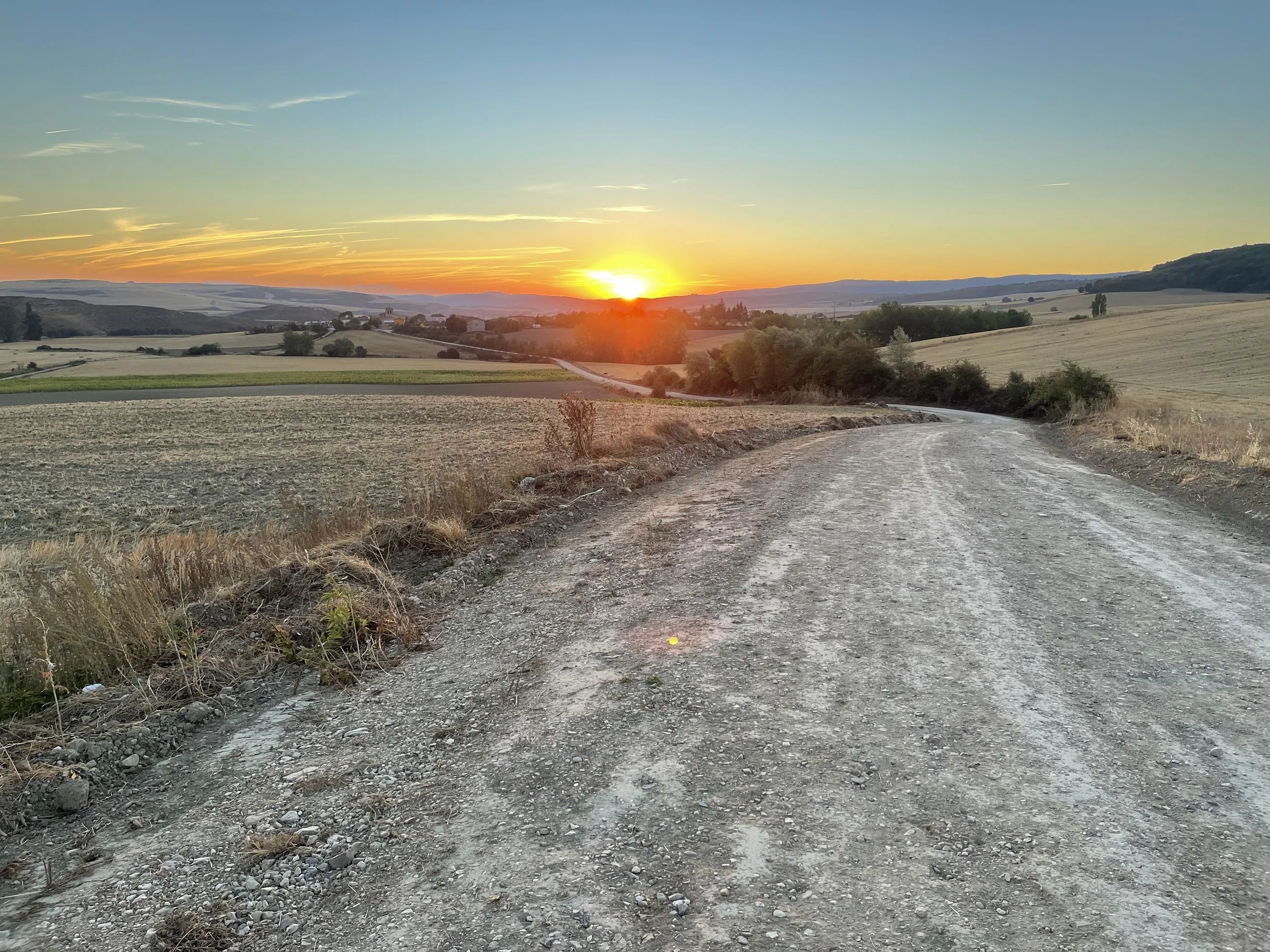
The Camino Doesn't Tell You What Comes Next
A recent Wall Street Journal article asks a question many of us carry onto the Camino: What comes next? But perhaps the Camino's greatest gift isn't giving us the answer. It's helping us let go of what came before, create space, and become open to what is ready to emerge.
Sometimes the most important part of the Camino begins after we stop walking.
Recently, The Wall Street Journal published an article by Shannon Carroll with a headline that immediately caught my attention: “I Walked 500 Miles on the Camino de Santiago to Find What Comes Next.” Carroll had lost her job amid AI-era cuts, and much of the structure that had organized her life was suddenly disappearing.
So she did something people have been doing for more than a thousand years: she started walking. She chose the Camino Francés, beginning in the Pyrenees and walking roughly 800 kilometers across northern Spain to Santiago de Compostela.
What struck me most about her story wasn't the distance, the blisters, the rain, the communal albergues, or even the four nuns who joined a room full of pilgrims in singing “Take Me Home, Country Roads.” It was the question she carried with her: What comes next?
I know that question well. For most of my adult life, I knew where I was going. I spent more than thirty years building a career in the music and entertainment business. There was always another company to build, another project, another problem to solve, another goal somewhere out in front of me.
Then there wasn't. And like a lot of people who reach a major transition in life, my first instinct was to figure out the next thing. What's the next job? What's the next project? What's the next version of the life I already know how to live?
Eventually, I found myself walking the Camino too. I wish I could tell you that somewhere between Saint-Jean-Pied-de-Port and Santiago a yellow arrow pointed toward my new life, but it didn't. There was no new career plan waiting in front of the Cathedral.
What the Camino gave me was something I needed much more. It gave me the space to begin stripping away who I thought I was.
The Camino Creates Space
We spend decades accumulating identities. Executive. Parent. Spouse. Provider. Successful person. The one who has the answers. The one people depend on. Eventually those identities can become so intertwined with who we are that we have difficulty imagining ourselves without them.
For me, the Camino began stripping some of that away. Out there, very little of what had defined me back home mattered. Nobody cared about my résumé. Nobody needed to know what companies I had run or what I had accomplished. I was another pilgrim carrying a backpack and trying to get to the next town.
Life became remarkably simple. Wake up, put on your shoes and walk. Eat when you're hungry, talk to whoever happens to be beside you, find somewhere to sleep, and get up tomorrow and do it again.
Day after day, kilometer after kilometer, there was less noise. As some of those old identities began to loosen, there was finally room for something else to surface.
That distinction has become important to me. I don't think I found a new identity on the Camino. I created enough space for parts of myself that had been buried beneath the old one to begin emerging.
Our Instinct Is to Double Down
When an important part of our identity begins disappearing, the natural response is often to grab onto it even harder. We try to recreate the career, recover the status, replace the relationship or build another version of whatever previously told us who we were.
I did some of that too. It's understandable because the space between an old identity and whatever comes next can be deeply uncomfortable. We have spent our lives learning how to build, achieve, solve and control. When something stops working, every instinct tells us to work harder at it.
But sometimes the thing we're trying to save is exactly the thing we're being asked to release.
The Camino gave me a different way of responding. Walking itself became a ritual of letting go. Every morning I packed what little I had, left where I'd been and walked toward somewhere I had never seen. Every day required leaving something behind.
There were other rituals too—stones carried and eventually put down, prayers and intentions, conversations with strangers, moments of silence, arriving and departing. Some were ancient Camino traditions. Others became rituals of my own.
I write about many of them in Under a Canopy of Grapes because, looking back, I understand that they were doing something I couldn't fully see at the time. They were teaching me how to let go without immediately replacing what I had released.
Being Open to What Surfaces
This is where asking What comes next? can become complicated. It's an important question, but if we become obsessed with answering it, we can simply turn the future into another project to manage. We start searching for the next job, the next relationship, the next purpose, the next identity. Before we've really released the old life, we're already constructing its replacement.
The question itself can keep us looking so far ahead that we aren't paying attention to what is trying to surface now. The Camino taught me another possibility: strip away, let go, create space and pay attention.
That doesn't mean becoming passive. It means being open. It means resisting the urge to fill every empty space simply because emptiness makes us uncomfortable. It means trusting that we don't have to manufacture every answer.
The Camino is extraordinarily good at teaching this because you can plan the route, but you cannot plan what the road will bring you. You cannot schedule the stranger who will sit beside you at dinner, the conversation that will stay with you for years, the landscape that will unexpectedly bring you to tears or the difficult morning that will reveal something you weren't looking for.
You can prepare yourself for the journey. You can keep walking. But you also have to become present enough to receive what the road gives you.
Santiago Isn't the End
Eventually every Camino reaches Santiago. You stand in front of the Cathedral, take the photograph, hug the people you've walked with and perhaps attend the Pilgrim's Mass. Then, sooner or later, you go home.
That's when something interesting happens. The Camino ends, but the process doesn't. The identities you loosened are waiting for you. So are the routines, expectations and relationships you left behind. The world has not reorganized itself simply because you walked across Spain.
And now comes the harder question: What do I do with the space I've created?
There is an old word associated with the Camino: Ultreia—an encouragement among pilgrims to keep going, to move onward and beyond. I've come to understand that differently since returning home. Santiago may mark the end of the physical pilgrimage, but there is still an onward and a beyond.
The harder pilgrimage may be learning how to live once the yellow arrows disappear. That journey followed me home, and over time, I came to think of what followed as the Second Camino.
The first Camino is the walk across Spain. The Second Camino is what happens when we return home and try to live what we discovered along the way.
There are no yellow arrows on the Second Camino. There isn't a guidebook telling us where to stop each night, and there isn't a Cathedral waiting at the end to tell us we've arrived.
The temptation is to fill the space again—to return to what we know, rebuild what we've lost and double down on the identities that once made us feel secure. The harder work is remaining open long enough for something else to emerge.
What Comes Next May Already Be Surfacing
Carroll's article stayed with me because the question in its title is one so many of us carry onto the Camino and through other major transitions in our lives: What comes next? Her story describes a Camino filled with people walking for many of the reasons that bring us to these crossroads—burnout, career uncertainty, grief, retirement, faith and the desire to discover something different.
I recognize that experience. The Camino didn't tell me what came next either. Instead, it helped me release enough of what had come before that something new finally had room to emerge.
Perhaps that's a different way of thinking about transition, especially in the second half of life. Maybe we don't always need to figure out what comes next. Maybe we need to create the space for it.
To strip away some of the identities we've accumulated. To let go of what has finished. To resist doubling down on a past that no longer fits. To become present enough to notice what begins surfacing when we finally stop trying to force the answer.
That's what the Camino did for me. It didn't show me the future. It made room for it.
And I've come to believe that's where the Second Camino begins.
Shannon Carroll's “I Walked 500 Miles on the Camino de Santiago to Find What Comes Next” was published by The Wall Street Journal on August 25, 2026.
Read Shannon Carroll's original article: The Wall Street Journal
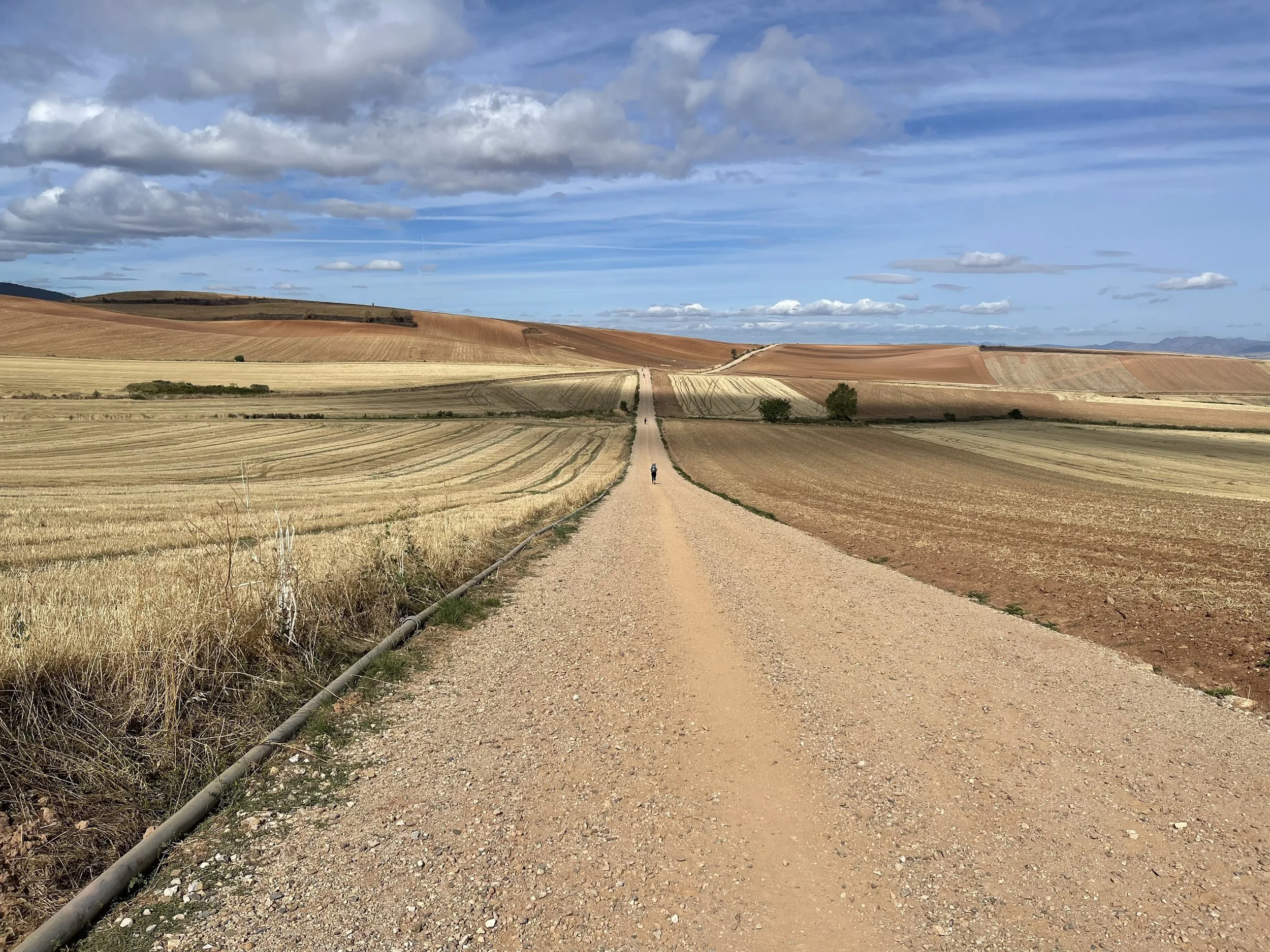
When the Second Half of Life Comes Calling
It rarely announces itself. It arrives as a question you cannot silence — why the second half of life calls quietly, and what the Camino has to do with answering it.
It rarely announces itself. It arrives as a question you cannot quite silence.
Nobody tells you it will feel like this. You expected something louder — a crisis, a collapse, a moment you could point to afterward and say: that was when everything changed. Instead it arrives quietly, in the middle of an ordinary Tuesday, as a question you cannot quite place and cannot quite ignore.
Is this still who I am?
If you know that feeling, you are in the right place. And if you have been walking around with that question for longer than you would like to admit, I want to tell you something important: you are not falling apart. You are being called forward.
It Usually Begins With Success
Here is what almost nobody says about midlife transition: for many of us, it does not begin with failure. It begins with success. We arrive somewhere we spent years trying to reach — a title, a salary, a version of our lives that looks from the outside exactly as we hoped it would — and we discover that the view from the summit raises new questions rather than answering the old ones.
I spent more than thirty years building a career in the music industry. I was good at it. By most measures I had succeeded. And somewhere in the years after my biggest professional exit, I found myself sitting with a restlessness I could not name, a sense that I had been living from a blueprint that no longer fit the person I had become.
I did not know it then, but that restlessness was an invitation. The second half of life was calling, and it speaks differently than the first half did. The first half speaks in goals and timelines and external measures. The second half speaks in questions. Quiet ones. Persistent ones. The kind that wait for you in the early morning before you are busy enough to outrun them.
The first half of life teaches us how to build a life. The second half asks whether that life still reflects who we have become.
What the Second Half of Life Is Actually Asking
The theologian Richard Rohr writes about the two halves of life as distinct journeys. The first half is about building a container — an identity, a career, a structure to live inside. The second half is about discovering what the container is actually for.
That distinction changed everything for me. I had spent decades building. I was very good at building. What I did not know how to do was stop building long enough to ask what I was building toward.
The second half of life isn't a destination we suddenly arrive at. We grow into it through hundreds of ordinary days — a conversation that goes deeper than expected, a morning walk that turns into something closer to prayer, a moment of stillness that arrives uninvited and refuses to be rushed. The transition happens in those small moments long before we have a name for what is occurring.
The questions that arrive in the second half of life are not problems to solve. They are invitations to live differently. They ask about meaning rather than achievement, about depth rather than breadth, about what you want to leave behind rather than what you want to accumulate. They ask whether the relationships in your life are nourishing or merely familiar. They ask what you would do if the answer were not about money or status or someone else's approval.
They ask, at their deepest level, whether you are willing to become who you actually are.
Why the Camino Finds People at This Moment
I have walked the Camino de Santiago three times. Each time I went looking for something different. Each time the Camino gave me something I was not expecting.
What I have come to understand is that the Camino has a particular pull for people in this season of life — not because it offers answers, but because it creates the conditions in which the right questions can finally be heard. Day after day, mile after mile, it strips away the noise. The calendar empties. The phone stops mattering. The roles you play at home — the executive, the parent, the expert, the person who has it together — begin to loosen.
And in that loosening, something else begins to emerge. Something quieter and more honest than the person you perform every day. The Camino calls it into the light simply by removing everything that was keeping it in the dark.
Many pilgrims return home changed in ways they struggle to articulate. Not because nothing happened, but because what happened happened at a level that words reach only slowly. Something shifted. Something was released. Something that had been waiting a long time finally had room to breathe.
The Second Camino Begins When You Come Home
Here is what I did not understand the first time I walked the Camino: the pilgrimage does not end in Santiago. It ends — or rather, it begins — the moment you return to your ordinary life carrying what you found on the road.
That is what I now call The Second Camino. Not another walk across Spain, though you may walk again. But the lifelong journey of living what the Camino revealed. Moving from the life you built toward the life that was always trying to emerge. From achievement toward meaning. From the warrior who built everything to the wizard who knows when to let things unfold.
This transition is not automatic. The research is clear on this: without intention, the insights fade. The old patterns return quietly, because they are familiar and the new way of being is still fragile. The integration work — the actual work of bringing the Camino home — is where the transformation either takes root or dissolves.
That is the work I do with the people I walk alongside. Not before the Camino only, and not after the Camino only, but through the whole arc of it — the preparation, the walk, the return, and the long, rich, sometimes disorienting process of becoming who you discovered yourself to be on the road.
If any of this is landing close to something you have been carrying, I would be glad to hear from you. You do not have to have it figured out. You just have to be willing to start the conversation.
The second half of life has already been calling. The question is whether you are ready to answer.
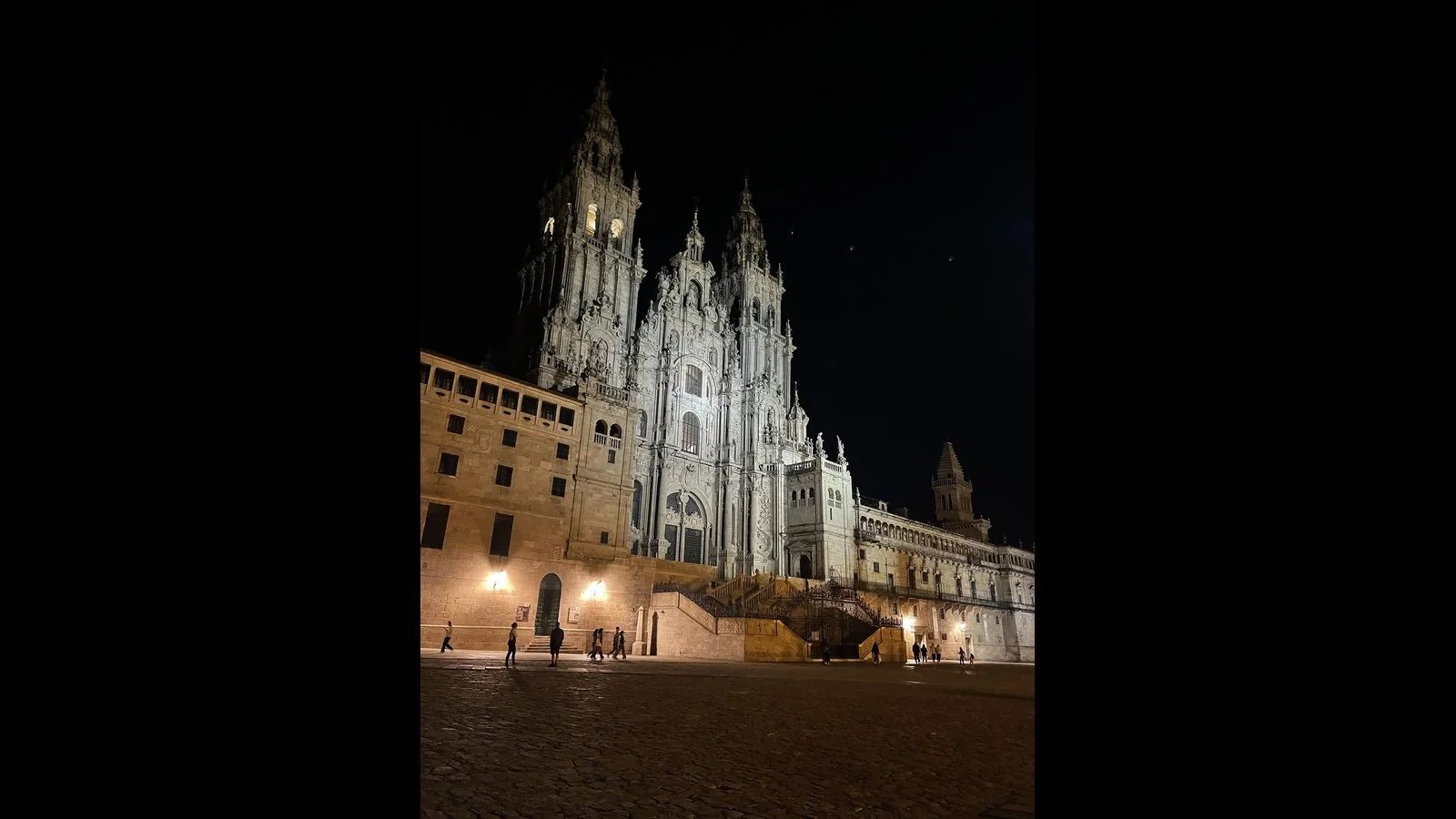
What Happens After the Camino de Santiago Ends
You cross the plaza. You touch the stone. And then it ends. Here's what comes next — and what to do with it.
You cross the plaza. You touch the stone. You stand in front of the cathedral in Santiago de Compostela and you feel something you cannot quite name.
And then it ends.
The walk is over. The credential is stamped. The certificate is in your hands. And within days — sometimes hours — something unexpected arrives.
A flatness. A quiet that feels different from the quiet on the road. A sense of loss you did not anticipate because you just finished something meaningful.
For many people, finishing the Camino de Santiago is not the end of the journey, but the beginning of a different kind of work.
The Camino Blues Are Real
Most pilgrims feel it. You return home to the same house, the same routines, the same people who were not there and cannot fully understand what you just walked through. The contrast can be jarring.
Do not mistake this for failure. Do not mistake it for the Camino not having worked.
The blues are a signal that something real happened out there. You opened. You changed. And now the ordinary world feels like it does not quite fit the person who just came home.
That discomfort is not the problem. It is the beginning of the real work.
The Work Begins Here
The question is not why do I feel this way. If you are still making sense of what the Camino changed in you, start here.
The question is how do I bring what I found on the road into the life I am actually living.
That shift — from disappointment to integration — is everything.
It does not happen all at once. It should not. The Camino taught you that. One step at a time, one kilometer at a time. The same is true now.
Give yourself permission to take baby steps. You do not have to redesign your entire life in the first week home. You do not have to have answers to every question the Camino surfaced. The pressure to immediately translate a profound experience into dramatic life changes is one of the fastest ways to lose what you found.
Trust the pace. The Camino will keep delivering long after you come home. In many cases it keeps giving for years — a memory surfaces at the right moment, a lesson you thought you had forgotten shows up exactly when you need it. The road does not stop teaching when you leave it.
Keep Walking
This one is practical and important.
Keep walking after you come home. Not 500 miles. But something. A daily walk, even a short one, reconnects you to the state the Camino opened in you. The rhythm of movement, the simplicity of putting one foot in front of the other, the time alone with your own thoughts — that is available to you every single day. Do not leave it on the road in Spain.
Write It Down
A journal is one of the most powerful tools for post-Camino integration.
Write about what happened. Write about what surprised you. Write about what you are still carrying. Write about what you are ready to set down.
You do not need to write brilliantly. You need to write honestly. The journal becomes a map of your inner journey — something to return to when the clarity fades, something that shows you how far you have come when the path ahead feels uncertain.
Share Your Story
Tell people what happened out there. Not to perform the experience but to process it. Speaking your Camino story out loud helps you understand it more deeply. And you will find that your story reaches people in ways you did not expect — someone who needed exactly what you found, someone who has been thinking about walking, someone whose own life is at a crossroads.
Your story matters beyond yourself. Share it.
Pull Back When You Need To
Here is something less talked about. After the Camino you may find yourself wanting to share everything, to be seen, to integrate loudly and publicly. And there is a place for that.
But there is also a place for pulling back. For protecting what is still tender. For giving yourself private time to absorb what happened before you offer it to the world.
You do not have to be on all the time. The Camino taught you the value of silence and stillness. Honor that in your return as well.
Trust Your Gut and Your Feet
On the Camino when a path felt wrong you pivoted. When your body said rest you listened. When a different route called you, you followed it.
Do the same in your life after the Camino.
If something feels off — a relationship, a job, a direction — trust that signal. You have just spent weeks developing one of the most important skills a person can have: the ability to listen to yourself. Do not stop using it because you are home.
If the path you are on is not working, pivot. Try a new direction. Take a smaller step. The same instincts that guided your feet across Spain can guide your life.
The Camino Does Not End in Santiago
It changes location.
What began on a gravel path in the Pyrenees continues in your kitchen, your office, your relationships, your quiet moments before the day begins.
The question the Camino asked you — who are you becoming and how do you want to live — does not stop asking just because the walk is over.
Be patient with yourself. Be kind. Be compassionate. You walked something extraordinary. Give it the time and care it deserves to find its place in your life.
The road is still with you.
Buen Camino. Michael Rucker Camino Más Allá
Related Reading:
What Science Now Confirms About the Camino de Santiago
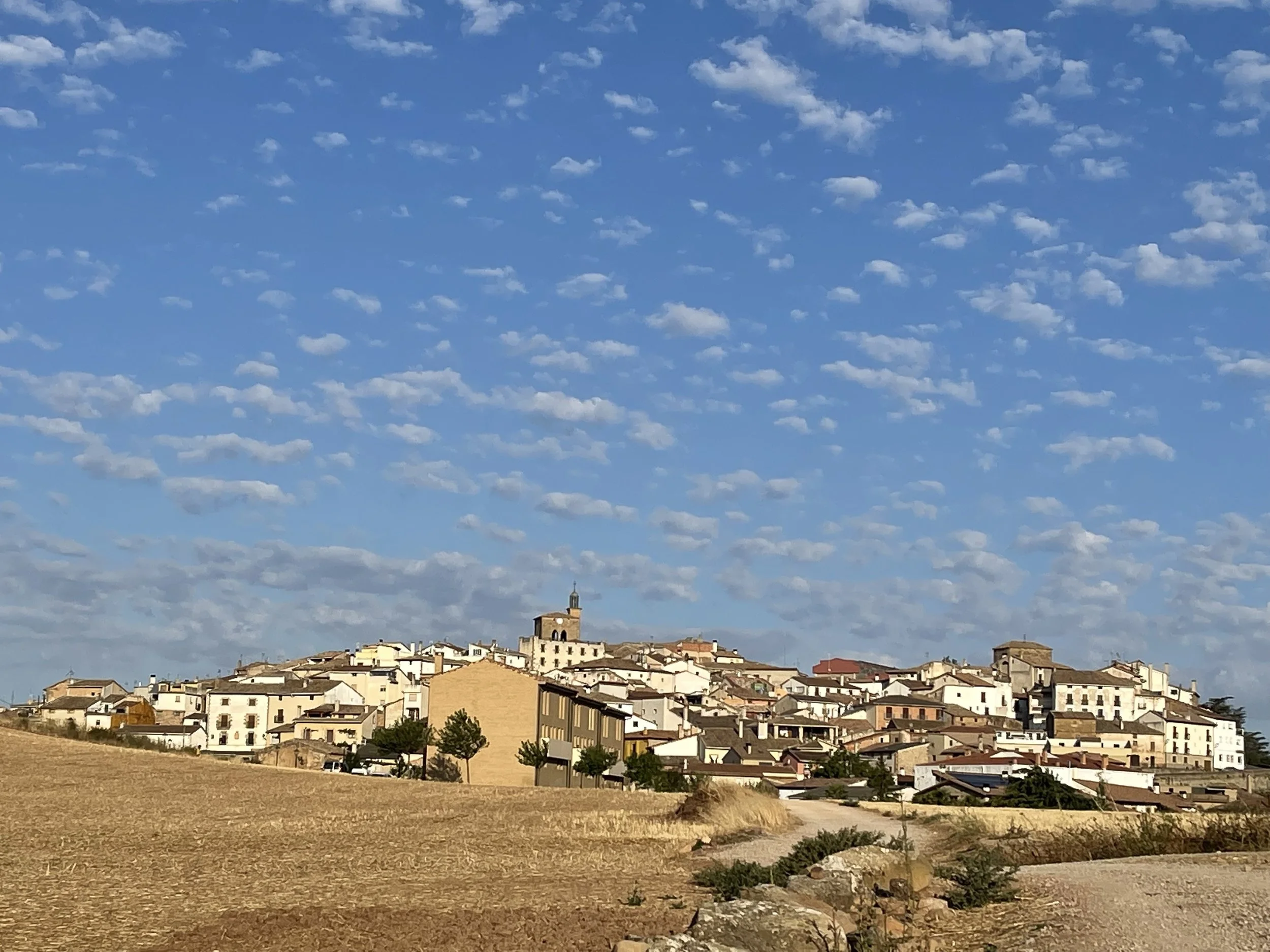
What Research Is Revealing About the Camino de Santiago
New research confirms what pilgrims have known for centuries. The Camino de Santiago produces lasting transformation — and the most important changes happen after you return.
For years, people have come back from the Camino trying to explain what happened to them.
A shift. A loosening. A sense that something fundamental changed.
Most people around them nodded politely and assumed it was the fresh air or the exercise.
It wasn't.
Now the research is catching up.
A growing body of scientific literature, including a study of more than 500 pilgrims published in Psychology Today, confirms what walkers have known for centuries. The Camino produces lasting transformation. And the most important changes happen after you return.
What the Research Actually Found
The pattern is consistent.
Pilgrims report:
A deeper appreciation for life
A stronger sense of meaning and purpose
Greater concern for others
More authentic self-acceptance
Heightened spiritual awareness
At the same time, something else begins to loosen. Status. Wealth. Security. The metrics that defined the first half of life lose their grip.
What replaces them is harder to measure but easier to feel. Connection. Presence. The question of how to live, not how to perform living.
One study found that improvements in emotional and mental wellbeing after the Camino were significantly greater than those of people who took a standard vacation of the same length.
This was not rest. This was something else.
What This Means for Midlife
For people in the second half of life, this matters.
Career shifts. Identity questions. The quiet sense that something no longer fits.
The Camino does not just improve your mood. It restructures what you value.
In Falling Upward, Richard Rohr describes this as the movement from the survival dance to the sacred dance. The first half of life is about achievement and accumulation. The second half is about meaning, depth, and presence.
The research confirms that the Camino accelerates this shift — moving people from What have I achieved? to Who am I becoming?
The Camino Will Not Give You Your Answers
This part matters.
The Camino will not hand you a five-year plan. It will not resolve your relationships. It will not choose your next career. It will not tell you where to live.
It is not a decision machine.
What it does is change how you see. How you approach things. How you show up. It removes the armor. And what's left is you.
From Warrior to Wizard
Most of us arrive at midlife having mastered the warrior stage. Goals. Achievement. Control. Identity built on what you do.
And quietly, we begin to see it is not enough.
The next stage is different. Presence over performance. Wisdom over force. Depth over speed.
The Camino is one of the most reliable paths for making that transition. Not because of the distance. Because of the silence. Because there is nothing left to manage. And the deeper questions finally get heard.
Your Story Becomes the Gift
One of the most consistent findings is this: people come back wanting to share. Not to perform it. To offer it. Their story becomes something they feel called to give.
This is the Camino continuing long after the walk ends.
In a world increasingly shaped by algorithms and artificial intelligence, the Camino remains something that cannot be automated. It has to be walked. Felt. Lived. Earned. No technology can do that for you.
That is why it still matters. That is why it will always matter.
If you are navigating a midlife transition and wondering whether the Camino might be part of what comes next, this is exactly the work we do at Camino Más Allá — helping you prepare for the inner journey before the outer one begins, and integrate what you find when you return.
Buen Camino.
Michael Rucker
Camino Más Allá
Psychology Today: How the Camino de Santiago Changes People After They Return
Related Reading:
How Walking the Camino de Santiago Changes You
How to Prepare for the Camino de Santiago Mentally
Should I Walk the Camino de Santiago? 5 Questions to Ask Yourself
How To Prepare For The Camino de Santiago (Mentally, Not Logistically)
The Camino will meet you where you are. The wonderful part will be when you meet yourself.
The Camino will meet you where you are. The wonderful part will be when you meet yourself.
I've met people who spent months preparing for the Camino — and were undone in the first three days. Not because of their bodies. Because of their minds.
They had the right boots, the right pack, the right route. What they didn't have was any practice being alone with themselves. And the Camino, from the first morning, asks you to do exactly that.
Here is what I know from walking it three times and from working with pilgrims at every stage: the boots don't carry you. Your mind does. And if your mind is still running on the same operating system — the one that says I can't do this, I'm not ready, this is too much — then no amount of gear will get you to Santiago.
The good news? You can change that before you ever leave home. Not by reading more or planning more. By walking. And then by paying attention while you walk.
Step One: Just Show Up for Today
The Camino is 800 kilometers. And that number, if you let it, will stop you before you start.
So don't start there. Start with one walk. Today.
Not a training walk with a weighted pack and a GPS tracker. Just a walk. Around the block, through the park, wherever your feet take you. The distance doesn't matter. What matters is that you do it — and that you do it again tomorrow.
Consistency is the first spiritual practice of the Camino. Not mileage. Not gear. Not readiness. Just this day, this walk, this hour.
When pilgrims tell me they're afraid they can't walk 500 miles, I tell them this: nobody walks 500 miles. They walk one day. Then another. Then another. The Camino is just a long enough string of single days that something inside you has no choice but to change.
Your preparation works the same way. One walk today. Same time tomorrow. It doesn't have to be long. It just has to happen. That simple act — especially on the days when you don't feel like it — is already the most important training you can do.
Step Two: Learn to Be Fully Present
Once you're walking consistently, the next shift is to stop walking through your surroundings and start walking with them.
Most people don't struggle with the walking. They struggle with being alone with themselves.
Most of us spend our walks inside our heads — replaying a conversation, rehearsing a worry, half-listening to a podcast. But the Camino asks something different of you, and you can begin practicing it right now, wherever you are.
On your next walk, leave the earbuds at home. Walk without agenda. Then begin to look — really look — at what's around you. The quality of light on a building. The sound of wind moving through leaves. An ordinary moment that, if you let yourself, you can find genuinely beautiful.
Presence isn't a feeling you arrive at. It's a practice you return to, again and again, until returning becomes easier than leaving.
This isn't about forcing positivity. It's about training your attention. The Camino is full of moments of extraordinary grace — but only if you've learned to be somewhere other than your own thoughts when they arrive. You can start learning that today, on an ordinary street, by simply deciding to look up.
As your walks get longer, you'll find a rhythm. Breathe into it. Notice what brings you alive out there — the smell of morning, a hill that opens into a view, the particular silence of a wooded path. Seek those things. The Camino will ask you to find enjoyment in the walking itself, not just in arriving. This is your rehearsal.
Step Three: Turn the Walk Inward — Meet What's Waiting
Once presence becomes easier, something interesting begins to happen. The outside world quiets, and the inside world speaks up.
This is where the real preparation begins.
What you'll find, if you let yourself go there, is a collection of voices — old, familiar, often unkind — that have been running quietly in the background your whole life. The Camino has a way of turning up their volume. Better to meet them now, on a trail near your house, than to be ambushed by them somewhere in the Meseta.
The "I Can't" Inventory
After one of your walks, sit down with a notebook and write at the top of the page: All the reasons I can't do this. Then write every one of them down. Don't edit. Don't argue with them. Just let them come.
I'm too old. I'm not fit enough. I have bad knees. I've never done anything like this. What if something goes wrong? What will people think if I don't finish? Who am I to do something like this?
Write them all down.
Now — and this is the important part — take each one and write a single question next to it: What if I did it anyway? How would I feel?
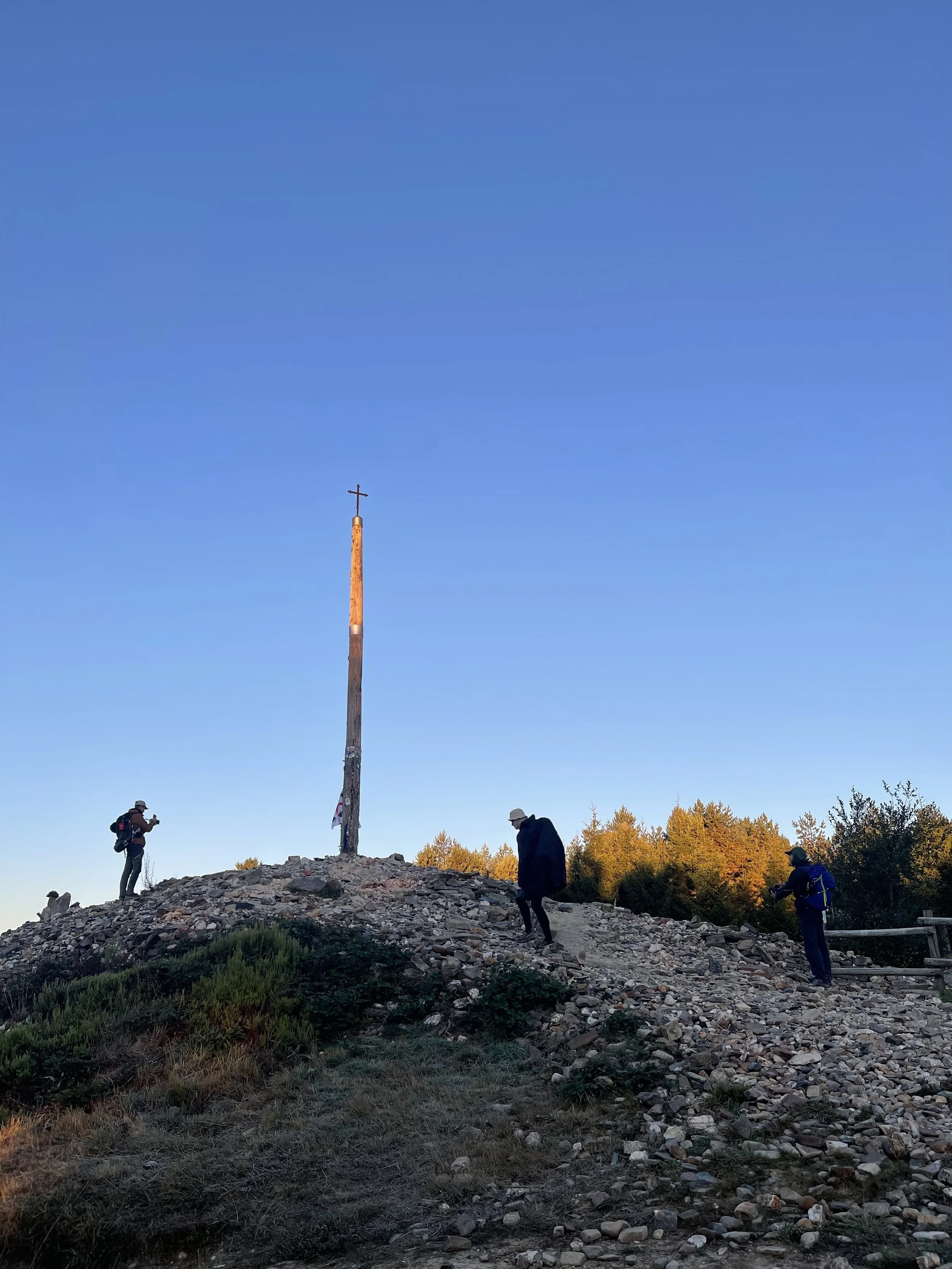
Don't answer from logic. Answer from your body. Close your eyes. Picture yourself standing at the Cruz de Ferro, or walking into Santiago, or simply making it through the first day. Where do you feel that? In your chest? Your throat? The backs of your eyes?
That feeling is information. It is telling you something your "I can't" list has been trying to drown out.
The voices that say you can't do it are not the truth. They are old protection strategies — ways your nervous system learned to keep you safe from disappointment and failure. They served a purpose once. But they are not the whole story, and they are not yours to keep forever.
The Camino will challenge them. Your preparation is learning to challenge them first.
Step Four: Walk With Your Questions, Not Your Answers
Many pilgrims arrive on the Camino looking for answers. The ones who leave transformed are the ones who learned to walk with their questions instead — to carry them lightly, without forcing them to resolve.
You can practice this now. On a longer walk, after you've settled into your stride and the mental chatter has quieted, bring a question with you. Not a problem to solve. A question to simply be with.
What am I carrying that I no longer need? What do I want the second half of my life to look like? What would I do if I wasn't afraid? Who am I when no one is watching and nothing is required of me?
Don't answer it. Just walk with it. Let the rhythm of your feet work on it. Notice what comes up — images, feelings, old memories, sudden clarity, deeper confusion. All of it is useful. None of it needs to be figured out today.
The Camino is not a problem to be solved. It's a conversation to be entered. Your only job is to show up willing to listen.
What you're building is the single most important skill a pilgrim can have: the ability to be with yourself — with your questions, your fears, your longing — without needing to fix or escape any of it. That's not a skill we're typically taught. It takes practice. Start now.
Step Five: Let the Walk Become the Teacher
The Camino doesn't begin in Saint-Jean-Pied-de-Port. It doesn't begin when you lace up your boots on Day One.
It begins the moment you decide to pay attention.
Every walk you take between now and your departure is part of it. Every time you move from I can't to I'll just walk today, you are already on the path. Every time you put down the phone and look at a tree — really look at it — you are already learning what the road will teach you.
The Camino will meet you where you are. It always does. But it will ask you to arrive as honestly as you can — not as the person you think you should be, not as the person you used to be, but as exactly who you are right now. Scared, uncertain, undertrained, and completely enough.
You're not becoming someone new. You're remembering who you are.
Buen Camino — the road is already yours.
If you're in the early stages of considering a transformational Camino, I'd love to talk. This is exactly what the work of Camino Más Allá is built for — walking alongside you before the walk begins.
Related Reading:
Should I Walk the Camino de Santiago? 5 Questions to Ask Yourself
Should I Walk the Camino de Santiago?
Should you walk the Camino de Santiago? This guide explores when the Camino appears in your life, what it really requires, and how to know if it’s right for you.
People ask me all the time whether they should walk the Camino de Santiago, and I have noticed that the question tends to surface most urgently in those moments when a life has come loose from its moorings and the next step refuses to reveal itself. But here is what I have learned about most people who allow themselves even a passing thought of the Camino: the thought rarely survives its own first sentence. I could never do that. The person speaking those words does not see a pilgrim when they look in the mirror. They see distance instead, and effort, and uncertainty. So the idea that might have changed everything about their life stays exactly where it was born, a thought and nothing more, unwalked and unlived.
What the Camino actually asks of you has almost nothing to do with what people imagine it asks. It does not demand perfection, and it certainly does not demand the kind of extraordinary courage that belongs in adventure films and war memoirs. What it demands is far simpler and far more available to an ordinary, frightened, uncertain human being than most people believe. It asks for openness. It asks for willingness. That is the whole of the admission price. I have watched people pay it who arrived at the trailhead in Saint Jean Pied de Port utterly convinced they could not walk the distance in front of them. I have watched people who carried the idea of the Camino around for years like a stone in their pocket before they finally let themselves begin. I have watched people who had no idea whether they were ready, and went anyway, because some part of them understood that readiness was never going to be the point.
I was one of those people, and I want to be honest about the fact that nothing about my own beginning felt clean or romantic or touched by some clear and certain calling. I did not hear a voice. I did not have a vision. I simply did not know what to do next, and that not knowing had a weight to it that I still remember in my body. We had just come through the pandemic, and I had no job waiting for me on the other side of it. I was newly sober, which meant I was relearning how to be a person in the world without the thing I had leaned on for years, and my confidence had been worn down to something so thin that the idea of chasing another title, another role, another version of the life I had already lived, did not even register as a real option. Nothing in front of me pointed anywhere in particular. So I chose the one thing I could find that had a beginning and an end, a path with an actual destination, and that choice, made more out of desperation than wisdom, ended up changing the entire shape of my life.
For a great many people, the Camino does not arrive as an invitation. It arrives in the wake of change, summoned not by careful planning but by disruption, the kind that chooses its own timing and gives no warning before it knocks. Richard Rohr writes in Falling Upward that we almost never walk into the second half of our lives by our own volition. Something has to break us open first, some loss or transition or unplanned shift that we did not see coming and would not have chosen if given the choice. A death arrives and rearranges everything around it. A job ends and takes an identity down with it. A retirement lands and leaves a silence where a schedule used to be. A marriage ends and the house feels unfamiliar even though nothing in it has moved. Or perhaps nothing dramatic happens at all, and you simply wake up one ordinary morning with the quiet, undeniable realization that the life you built with such care no longer fits the person you have become. Whatever form it takes, the question that follows is often the same, and it is a question that will not be talked out of asking itself. What now?
If any of that sounds like the inside of your own chest right now, I would encourage you to sit with the question a while longer rather than rushing past it toward logistics and packing lists, because the real answer was never going to be found in gear or guidebooks or itineraries. It is going to be found somewhere quieter, and I have come to believe there are five honest questions worth asking yourself before you decide whether the Camino belongs in your life. Do you need to dig deeper to understand what comes next for you? Are you feeling lost, and yet still holding on to some flicker of hope that something worthwhile lies ahead of you? Would time away, spent walking through open country with nothing but your own footsteps for company, help you see your life more clearly than you can see it now? Are there questions living inside you that you cannot answer from wherever you happen to be standing today? And underneath all of it, do you need something more than a vacation, something closer to a full and honest reset?
If you find yourself answering yes to even one of those questions, and answering it quietly, almost against your own will, then I do not think the Camino is something you should dismiss so easily. Not because you have finally become ready. There may never be a moment when you feel completely ready. But because you have become open, and openness has always been the requirement that mattered most. You do not walk the Camino de Santiago once every piece of your life has been figured out and arranged into a tidy and defensible plan. You walk it precisely because you are willing to take the first step without any guarantee of where the road will eventually lead you, and I promise you that willingness, however small it feels in this moment, is enough to begin.
Buen Camino.
Michael Rucker Camino Más Allá
If the Camino has been quietly calling you and you'd like to talk about what that might mean, you're always welcome to start with a conversation.
Learn more about working together here
Related Reading:
Is the Camino Calling You? How to Know It's Time to Walk the Camino de Santiago
Is the Camino Calling You? How to Know It’s Time to Walk the Camino de Santiago
When life goes quiet in all the wrong ways, a 500-mile walk through Spain has a way of making itself known.
The Camino de Santiago often appears during moments of change, when something in life no longer fits but the next step isn’t fully visible.
When life goes quiet in all the wrong ways, a 500-mile walk through Spain has a way of making itself known.
I did not find the Camino de Santiago. It found me. I was somewhere in the middle of a life transition, not quite falling apart, not thriving, just sitting inside a quiet that felt louder than it should. I knew I needed something. A challenge. An adventure. Something with a start date and an end date. And then one day, without entirely knowing why, I started researching a 500-mile pilgrimage across Spain.
That is usually how it happens. Not with certainty, but with a pull.
"The Camino does not wait for you to be ready. It waits for you to be honest."
If you have landed here, something in you is already asking a question. Maybe the answers you need are not coming fast enough. Maybe you are more impatient with your own life than you have ever been. Maybe the path forward looks unclear no matter how hard you look. If any of that sounds familiar, you may want to keep reading.
What the Calling Often Looks Like
The Camino tends to find people at moments of real disruption. Not always catastrophic, but always significant.
A relationship ending. A career that no longer fits. Children leaving home. A parent is gone. A quiet spiritual question that will not go away. Or simply a feeling of being lost, not broken, just genuinely unsure which way to go.
Not in crisis. Just standing at a crossroads, carrying something you cannot set down, and looking for the space to figure out what it is.
The First Move Is Not to Book a Flight
If you feel the pull, the wisest thing you can do is slow down before you do anything else. Don’t panic, plan but rather just listen. The calling is real, but a fast decision made from restlessness can miss the point entirely.
Start by getting close to it. Read. Listen. Talk to people who have walked it. Let their stories reach you. The Camino is not something you understand all at once -- it becomes familiar slowly, the way a place does before you have ever been there. You will know something important when you hear it. The kind of thing that lands in your chest, not just your head.
"The Camino is not an escape. It is an arrival -- at yourself, at your questions, at whatever it is you have been carrying without knowing what to call it."
When you have done that work, there is one question worth sitting with honestly: Am I ready to receive? Not ready to perform, not ready to push through -- but ready to open, to allow, to let whatever comes up on the road actually reach you.
How to Know If It Is Calling You
There is no single test, but here is a process that has helped many pilgrims move from uncertainty to clarity. Take your time with each step.
1. Acknowledge where you are
Be honest with yourself about what you are carrying. You do not need to have it all figured out. You just need to be willing to name it -- the loss, the question, the restlessness, the feeling of being between one life and the next.
2. Listen to the pull without acting on it yet
If something in you keeps returning to the Camino -- a video, a conversation, a recurring thought -- do not dismiss it and do not rush toward it. Let it stay present. Pay attention to what it is trying to tell you.
3. Research with real curiosity
Watch The Way. Read pilgrim memoirs. Listen to people who have walked it. Follow the forums. Let the Camino world become familiar before you enter it. The more you know, the more clearly you will sense whether this is for you.
4. Start walking where you are
Before Spain, walk here. Walk your neighborhood, a local trail, a park -- something that gets you alone with your thoughts on foot. Notice what comes up. The Camino is not magic geography. It is a practice. The sooner you start that practice, the better prepared you will be. How to prepare mentally before you arrive is exactly what we explore in the next post.
5. Talk to people who have been there
Seek out pilgrims. Ask them what surprised them, what broke them open, what they brought home that they did not bring from home. Their answers will reach something in you that logistics cannot.
6. Ask the honest question
Am I ready to receive? Not to conquer, not to perform, not to check the Camino off a list -- but to actually open up to what this kind of journey can offer? And then: Can I invest the time, the energy, and the focus that this requires? If your answer to both is yes, the Camino may be calling you by name.
I have walked the Camino three times now. The first time it found me exactly where I described searching for a challenge with a start and a stop date, not fully understanding what I was stepping into. What I found on that road was not what I was looking for. It was better. It was what I needed.
That experience is what led me to the work I do now, walking alongside others as they prepare for and find their way into their own Camino.
That is the thing about the Camino. It tends to know more about what you need than you do going in.
If it is calling you, do not ignore it. And do not rush it. Listen first. Then take one step, and then another.
That is, after all, how every pilgrimage begins.
Buen Camino.
Michael Rucker, Camino Mas Alla
If you are preparing for the Camino and want support with the inner journey, you can explore Camino coaching here.
Related Reading:
Should I Walk the Camino de Santiago? 5 Questions to Ask Yourself
How to Prepare for the Camino de Santiago (Before the First Step)
Most pilgrims spend months choosing the right boots. Few spend even an hour learning to listen to themselves. Here is how to prepare for a transformational Camino.
Preparing for the Camino de Santiago is often seen as a physical challenge, but the deeper preparation is mental and emotional.
Most pilgrims spend months choosing the right boots.
Few spend even an hour learning to listen to themselves.
There is a version of the Camino that is primarily logistical.
Pack weight. Layers. Blister kits. Route maps.
All of that matters.
But none of it is what changes you.
What changes you is the silence.
The long stretches of path where there is nothing to manage, nothing to solve, and no one else’s agenda to attend to.
The Camino places you inside that silence for days at a time.
If you have not practiced being there, it can feel chaotic.
Like noise instead of music.
The pilgrims who walk away transformed are not the ones with the lightest packs.
They are the ones who came prepared to meet themselves.
That preparation begins at home.
On shorter walks.
In small moments of presence.
As you build physical readiness, you can also build the inner capacity that makes the Camino transformational rather than simply athletic.
Here are five practices to begin that work.
1. Begin with Beauty
Start each practice walk by noticing what is around you.
Light through leaves.
The sound of gravel.
Air on your skin.
This is not a warm-up.
It is the practice.
Beauty is often the first doorway into presence.
2. Allow What Arrives
Once you are walking, thoughts and memories will surface.
Do not chase them.
Do not push them away.
Simply let them be present.
Feel what they bring up in your body.
Then allow them to pass.
You are not solving anything.
You are learning to stay.
3. Walk Back Through Your Story
On longer walks, allow your mind to travel through your life.
Moments you have not visited in years.
Conversations unfinished.
Feelings that were set aside.
Notice how time has changed your understanding.
Notice how your body responds as you continue forward.
This is not rumination.
It is witnessing.
4. Sit With the Question
Some memories arrive without resolution.
Stay with them.
Not to fix them.
But to understand what they feel like now.
The Camino teaches us that unanswered questions are not failures.
They are invitations.
5. Name What You Carry
At the end of each longer walk, ask yourself:
What did today show me?
One sentence is enough.
Over time these reflections become a map of your inner journey.
That map is what you bring to Spain.
The real preparation for the Camino is learning to be fully with yourself.
Then learning to listen to what you find there.
Boots and packs will get you across the country.
Presence is what allows the journey to change you.
If you are preparing for a Camino and want support bringing this kind of inner work into your experience, I work with a small number of pilgrims each season in deep preparation and integration.
You can explore coaching here.
Camino Más Allá
Related Reading:
How Walking the Camino de Santiago Changes You
Is the Camino Calling You? How to Know It's Time to Walk the Camino de Santiago
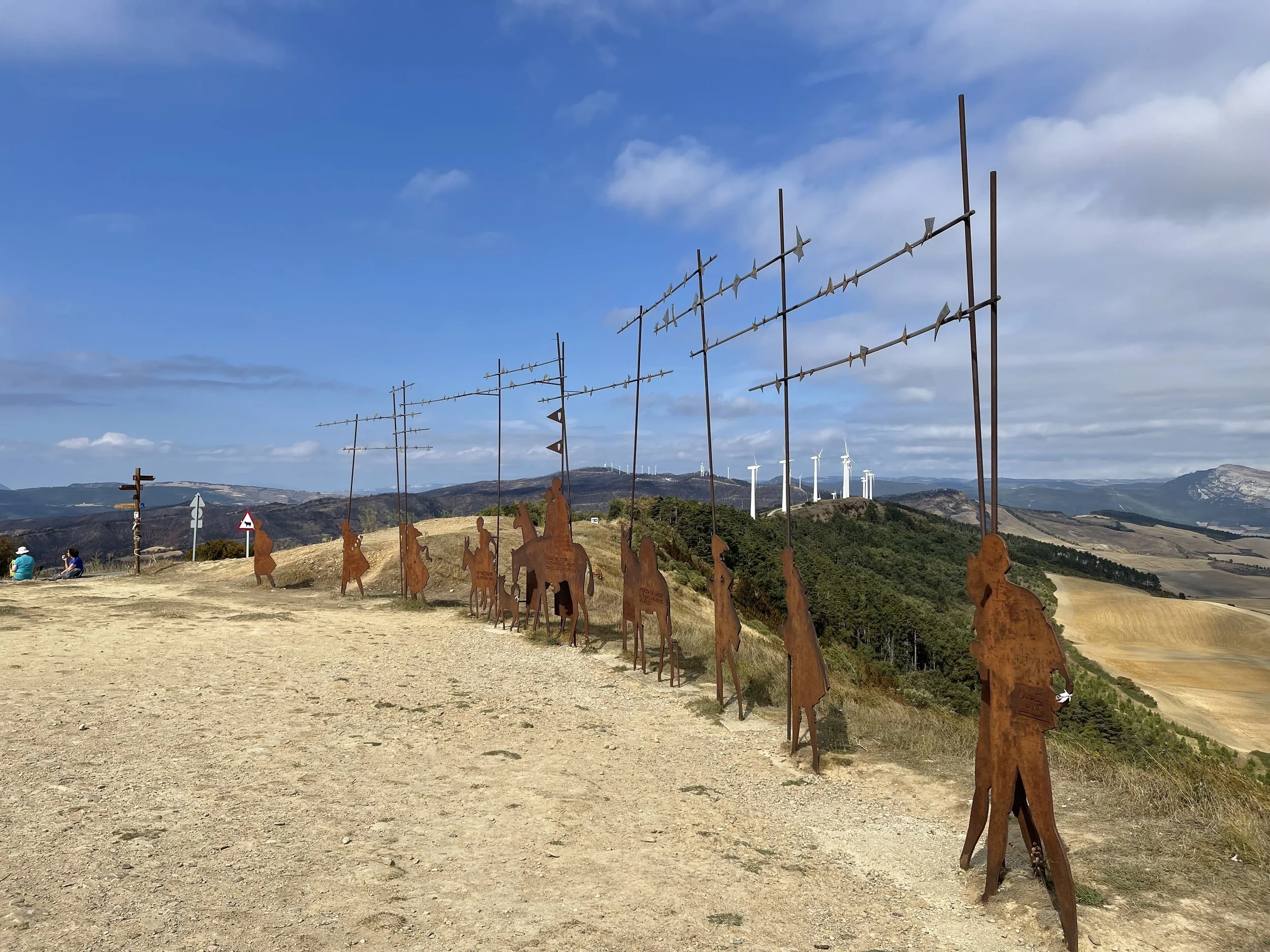
How Walking the Camino de Santiago Changes You (What to Expect)
There comes a moment when achievement no longer feels like enough. For thousands of people each year, the answer begins on an ancient pilgrimage route across Spain.
Walking the Camino de Santiago is not just a physical journey—it often leads to lasting personal and emotional change.
There comes a moment in many professional lives when achievement no longer feels like enough.
Careers that once felt meaningful begin to feel repetitive. Success that once energized us starts to feel hollow. Questions that were easy to ignore suddenly become unavoidable:
What comes next
Who am I becoming
What do I truly want from the second half of life
For thousands of people each year, the answer begins on an ancient pilgrimage route across Spain — the Camino de Santiago.
Walking the Camino is not simply a physical journey. It is a powerful catalyst for midlife reinvention, personal clarity, and meaningful life transition.
Why the Camino Speaks to Midlife Change
Midlife is often misunderstood.
From the outside, it can look like stability. Established career. Financial security. Professional recognition.
From the inside, it can feel very different.
Many people experience:
Loss of purpose after reaching long-held goals
Burnout from years of high performance
Desire for a slower and more intentional life
Questions about identity beyond professional roles
Need for emotional healing or personal transformation
The Camino creates the ideal environment to confront these realities honestly.
Removed from daily routines, social expectations, and digital noise, walkers begin to reconnect with themselves in ways that are difficult to access in normal life.
The Power of Walking for Personal Clarity
Walking long distances day after day produces a unique mental state.
The rhythm of movement quiets internal chatter.
Nature provides perspective.
Simple daily goals replace complex professional pressures.
On the Camino, life becomes distilled into essentials:
Walk
Eat
Rest
Reflect
This simplicity allows deeper questions to surface.
Many pilgrims report gaining clarity about career transitions, relationships, creative pursuits, and long-term life direction. Some return home with specific decisions. Others return with something even more valuable — a renewed sense of inner alignment.
Reinvention Happens in Small Moments
Transformation on the Camino rarely arrives as a dramatic breakthrough.
More often, it unfolds gradually.
A conversation with another pilgrim.
A sunrise over the Meseta.
A moment of exhaustion followed by unexpected strength.
The realization that you are capable of more than you believed.
These experiences accumulate.
By the time many walkers reach Santiago de Compostela, they are no longer the same person who began the journey.
They have not escaped their lives.
They have changed their relationship to them.
Preparing for a Transformational Camino Experience
While anyone can walk the Camino, approaching it intentionally can deepen its impact.
Thoughtful preparation helps pilgrims:
Clarify personal goals before departure
Develop the physical readiness needed for long walking days
Create emotional space for reflection and growth
Integrate insights into real life after returning home
A Journey Beyond Achievement
In modern culture, identity is often tied to productivity and external validation.
The Camino offers an alternative path.
It invites walkers to experience presence instead of performance.
Meaning instead of momentum.
Connection instead of comparison.
For those navigating midlife reinvention, this shift can be profoundly liberating.
Walking across Spain becomes more than a pilgrimage route.
It becomes a bridge between who you have been and who you are becoming.
Considering Your Own Camino
If you feel called toward change, clarity, or a deeper sense of purpose, the Camino de Santiago may offer the space you need.
It does not provide easy answers.
It provides something more powerful — the conditions to discover your own.
And sometimes, that is exactly what the next chapter requires.
If you are preparing for the Camino and want support with the inner journey, you can explore Camino coaching here.
Related Reading:
Is the Camino Calling You? How to Know It's Time to Walk the Camino de Santiago
Should I Walk the Camino de Santiago? 5 Questions to Ask Yourself